Measurement systems rarely spark debate, yet they quietly influence everything from checking the weather to figuring out whether to buy screws in the right size. Most of the world uses metric units. But the United States still relies on imperial measurements like inches, miles, and gallons. And Liberia and Myanmar use mixed systems that include older British and customary units. The situation may look like a few countries refusing to move on, but the reality is rooted in history, economics, and habit.
The metric system grew out of the French Revolution. It reflected an ambition to clean up the chaos of regional systems. Measurements linked to scientific constants offered a way to trade across borders without arguing over whose “foot” or “pound” counted. On the other hand, imperial units evolved through centuries of British law, commerce, and daily routines. By the time they spread across the empire, millions of people learned them in school, factories built equipment around them, and companies designed packaging to match familiar expectations. Changing all of that did not simply require a policy announcement. It meant recalibrating machines, rewriting textbooks and convincing people that the units they grew up with no longer served them.
Even countries that “converted” still live with hybrids. Canada sells gasoline by the liter, but many people track personal weight in pounds. Drivers in the United Kingdom follow speed limits in miles, yet medical charts use metric. Australia phased in metric quickly during the 1970s, although recipes, wine, and portion sizes still slip into older conventions in casual settings. These mixed systems remind us that standardization rarely marches in a straight line.
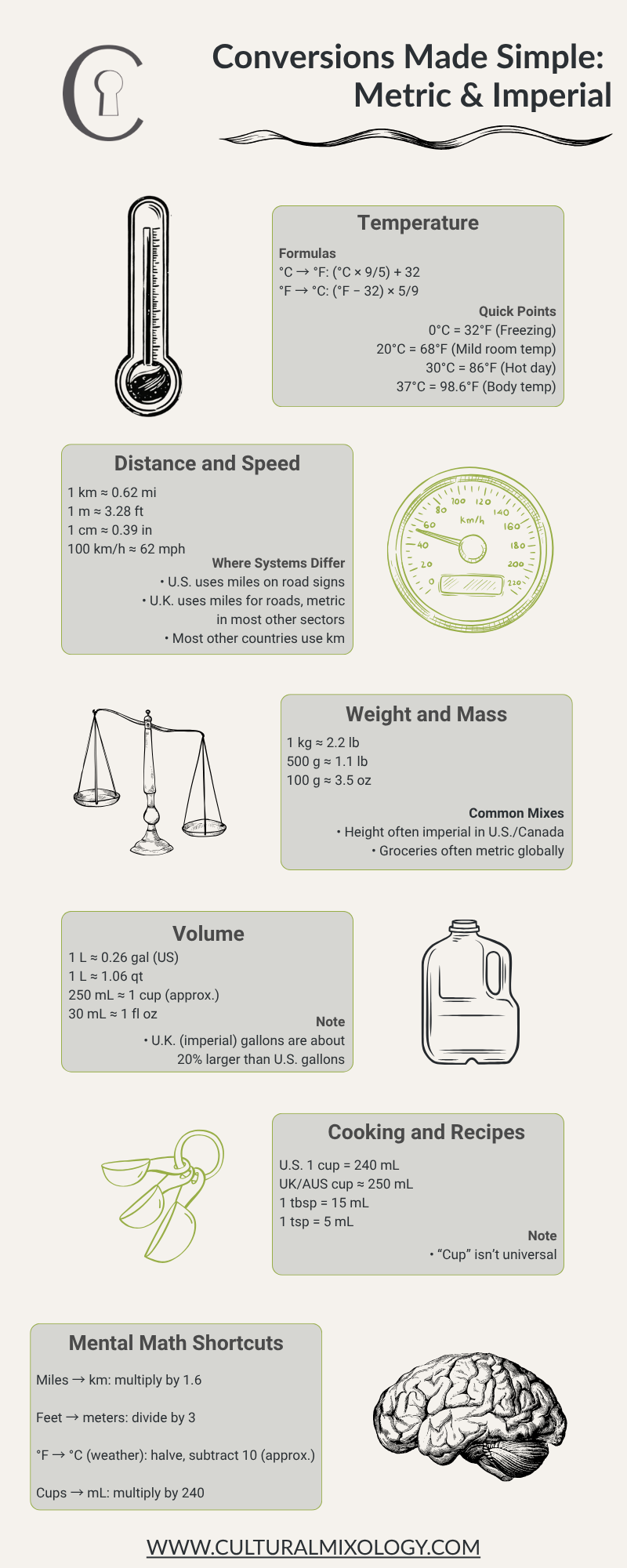
Whether you’re team metric or imperial, check out the infographic below. It will help you cut down on some mental math and have a clearer picture of when units collide!