Memorial Day sits at an unusual intersection in American culture. It is a day of remembrance for those who died in military service, but it also signals the unofficial start of summer, with travel, gatherings, and long-awaited time off. That duality often shapes how the day is experienced more than how it is formally defined.
What makes the holiday distinctive is not simply that it holds two meanings, but that those meanings are not required to align. Public memory and private routine often exist side by side. In practice, this means a national moment of remembrance can unfold in the same weekend as packed highways, beach traffic, and backyard barbecues.
This coexistence reflects how national observances in the United States are often lived in layers rather than as single, unified experiences. Formal remembrance, informal tradition, and seasonal habit can all occupy the same space without displacing one another.
As a result, Memorial Day does not form a single narrative. Instead, it functions as a marker in the calendar that carries historical weight while also signaling a shift in seasonal rhythm. Its meaning is not fixed in how it is celebrated, but shaped by how it is collectively lived.
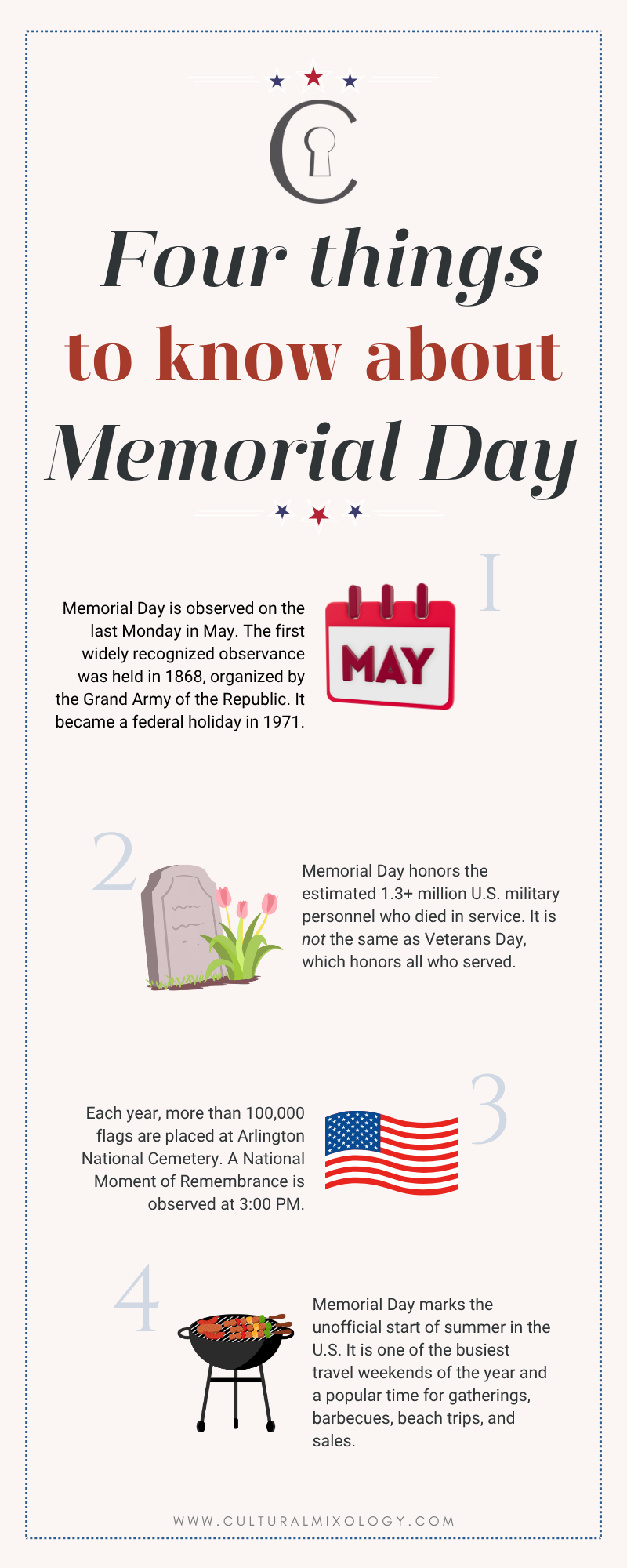
Check out the infographic below for four things to know about Memorial Day!