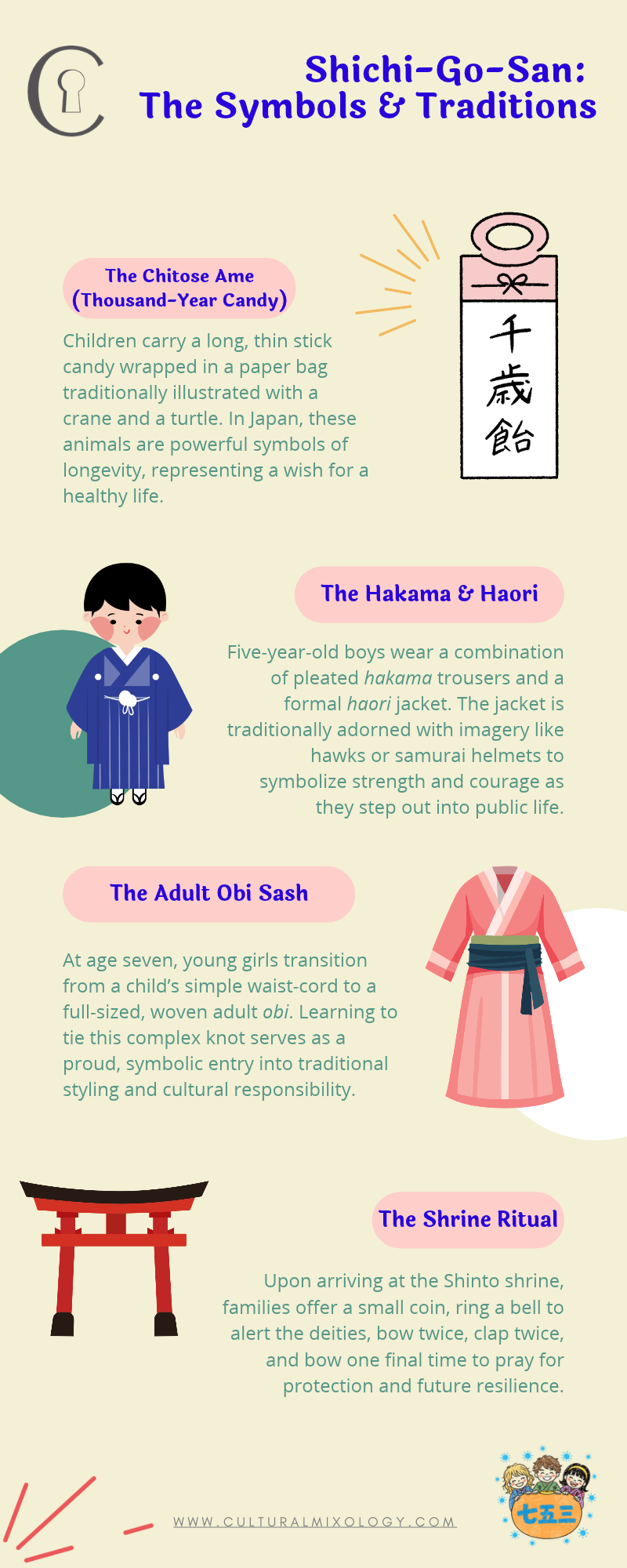
While these specific milestones might seem arbitrary, Shichi-Go-San historically anchored deeply significant clothing rituals that visually signaled a child’s new place in society. At age three, both boys and girls stopped the baby custom of shaving their heads so they could finally grow out their hair. By age five, boys donned their first hakama (formal pleated trousers) to take a symbolic step into boyhood. Upon reaching age seven, girls discarded simple childhood waist-cords to tie their very first adult-style obi sashes.
Although modern societal roles have evolved, the heart of Shichi-Go-San remains unchanged. Families celebrate these age-based milestones by visiting Shinto shrines across Japan. Children carry long paper bags containing chitose ame, a traditional stick candy that is physically stretched during production to symbolize a long, extended life. And everyone takes pictures, gives thanks for the resilience of youth, and prays for children’s future well-being.
Curious to learn more? Check out the infographic below for a visual guide to these traditional Japanese milestones!